
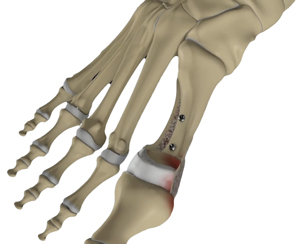
What is Minimally Invasive Foot and Ankle Reconstruction?
Minimally invasive foot and ankle reconstruction is an advanced surgical approach used to correct deformities, repair injuries, and restore function in the foot and ankle using very small incisions instead of traditional large open cuts. Unlike traditional open surgery, this approach minimizes soft tissue disruption while achieving precise bone and joint correction using specialized instruments and imaging guidance.
What are the Common Conditions Treated Using Minimally Invasive Foot and Ankle Reconstruction?
Minimally invasive foot and ankle reconstruction may be used to treat:
- Bunions (Hallux Valgus)
- Hammertoes and claw toes
- Achilles tendon disorders
- Flatfoot or cavus (high-arched) deformities
- Heel bone (calcaneal) deformities
- Ankle instability
- Arthritis of the foot and ankle
- Post-traumatic deformities
- Fractures requiring alignment correction
When is Minimally Invasive Foot and Ankle Reconstruction Indicated?
Minimally invasive foot and ankle reconstruction is indicated when there is structural deformity, instability, or damage to the bones, joints, tendons, or ligaments of the foot and ankle that cannot be managed effectively with conservative treatments such as orthotics, bracing, or physical therapy.
It is commonly recommended for patients with conditions like bunions, hammertoes, flatfoot deformity, post-traumatic malalignment, tendon injuries, chronic ankle instability, or early arthritis, especially when preserving soft tissue and minimizing recovery time are important.
What Does the Procedure for Minimally Invasive Foot and Ankle Reconstruction Involve?
In general, the procedure for minimally invasive foot and ankle reconstruction may involve the following steps:
- The patient receives regional or general anesthesia depending on the extent of surgery.
- The surgical area is sterilized, and a tourniquet may be applied to minimize bleeding.
- The surgeon makes several 2–5 mm incisions near the target area instead of one large cut.
- These incisions act as entry points for fine instruments and cameras.
- Fluoroscopy (real-time X-ray imaging) is used to visualize internal structures.
- Specialized minimally invasive instruments, such as burrs, shavers, and micro-screws, are inserted through the small incisions.
- Depending on the patient’s condition, your surgeon may perform the following:
- Bone reshaping or realignment is performed for deformities like bunions or flatfoot.
- Tendons or ligaments may be repaired, tightened, or lengthened.
- Arthritic joints may be fused or reconstructed to restore alignment and relieve pain.
- Internal fixation devices (like screws or plates) are often inserted to stabilize the bones.
- Once the reconstruction is complete, the small incisions are closed with stitches or adhesive strips.
- A light dressing or splint is applied to protect the area and maintain alignment.
What Does Postoperative Care for Minimally Invasive Foot and Ankle Reconstruction Involve?
After surgery, the foot or ankle is usually supported with a splint, boot, or brace to maintain alignment and stability. Patients are advised to keep the limb elevated, apply ice, and take prescribed pain medications to reduce swelling and discomfort. Weight-bearing is limited initially, with gradual progression as guided by the surgeon. The small incisions should be kept clean and dry, and follow-up visits are scheduled to monitor healing and adjust recovery plans. Physical therapy may begin once the initial healing phase is complete to restore strength, flexibility, and normal movement. Most patients gradually return to normal activities within 6 to 12 weeks, depending on the complexity of the reconstruction and individual healing response.
What are the Risks and Complications of Minimally Invasive Foot and Ankle Reconstruction?
The risks and complications of minimally invasive foot and ankle reconstruction are generally low compared to traditional open surgery, but as with any surgical procedure possible risks may include the following:
- Infection or delayed wound healing
- Nerve irritation or numbness
- Incomplete or delayed bone healing
- Malalignment or recurrence of deformity
- Hardware irritation or failure
- Persistent pain or stiffness
- Blood clots (rare)
What are the Benefits of Minimally Invasive Foot and Ankle Reconstruction?
Benefits of minimally invasive foot and ankle reconstruction over traditional open surgery may include the following:
- Smaller incisions with minimal scarring
- Reduced pain and swelling after surgery
- Faster recovery and return to activity
- Lower risk of infection and wound complications
- Shorter hospital stay or same-day discharge
- Improved cosmetic and functional outcomes
If you wish to be advised on the most appropriate treatment, please call to schedule an appointment or click to request an appointment online.